
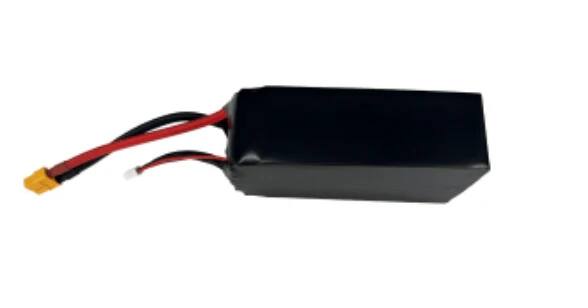
UAV & Drone Lithium Battery Packs for Aircraft OEMs
Lithium Battery Company supplies 12V/24V/48V-class LFP and NMC battery designs (3.7–52V, 1.5–720Ah) for OEM equipment. CANbus, RS485 and SMBus options are reviewed per design. Catalog programs start at 10 units; custom designs at 25. OEM delivery covers the United States, Canada, and Mexico with UN 38.3 transport documentation.
LBC / UAV & Drone
LBC builds UAV and drone lithium battery packs around propulsion peaks, flight runtime, pack mass and the airframe’s connector and telemetry interface. Chemistry (NMC or LFP), series count and BMS limits are selected only after the aircraft electrical brief is clear—not from a generic voltage label. Catalog aircraft reference designs start at 10 units; custom airframe packs start at 25.
Why choose LBC for uav & drone battery packs
Peak propulsion load and runtime
Describe propulsion peaks and flight runtime so pack output matches the aircraft load.
Mass, dimensions and connector requirements
Match pack mass, envelope and power connectors to the aircraft integration.
Charge profile and battery monitoring
Coordinate charging limits and battery monitoring with the aircraft’s electrical interface.
Start your spec
Send equipment load, runtime, voltage window, available space and quantities for a pack proposal.
Get a Quote →Design / Integration
Recommended pack types for uav & drone
NMC for weight-sensitive aircraft; chemistry and pack interfaces follow the flight load.
- 12V–14.X class packs — smaller UAVs, payloads and avionics buses
- 24V / 36V class packs — mid-size multirotors and VTOL assists (36V hub)
- 48V class packs — higher-power propulsion and tether-assist hybrids
- Airframe-specific form factor? Custom drone / UAV quote or configurator
Include peak/continuous current, voltage window, mass limit, envelope and connector pinout when you submit the RFQ.
Get a Quote ↗Catalog from 10 units · Custom from 25.
How custom battery quoting works →UAV & Drone battery design requirements
For OEM aircraft, compare nominal voltage, capacity, pack mass and dimensions against the propulsion load and mission runtime. Review peak current, voltage sag, connectors, charging and the battery interface as one design. LBC supports application-specific pack design and custom manufacturing.
Share the voltage window, continuous and peak load, runtime, available space, charge source, environment, communications, scope and forecast so LBC can review a suitable design and production path.
- Peak propulsion load and runtime
- Mass, dimensions and connector requirements
- Charge profile and battery monitoring
UAV & Drone battery pack FAQ
What flight-load data does LBC need before proposing a UAV pack?
Send continuous and peak propulsion current, voltage window, required flight or hover runtime, max pack mass, envelope, connector type, charger limits and any telemetry the flight controller expects. Those inputs drive cell count, BMS limits and thermal assumptions before a quote.
When should a UAV OEM choose NMC instead of LFP?
NMC is typically reviewed when aircraft mass and energy density dominate the brief. LFP is typically reviewed when cycle life, thermal margin or ground-support duty is the priority. Final chemistry is confirmed after load, temperature and airframe constraints are reviewed in writing.
Can the UAV pack report state of charge and faults to the aircraft?
Yes. Packs ship with a matched BMS. Communications (for example CAN, SMBus or discrete signals) are defined to the aircraft interface in the project brief. Unsupported protocols are flagged before prototype release.
How are UAV catalog packs different from a custom airframe pack?
Catalog reference designs start at 10 units and follow a fixed envelope and electrical interface. Custom airframe packs start at 25 units and redesign cells, BMS limits, connectors and mechanics around your drawings and propulsion profile.