

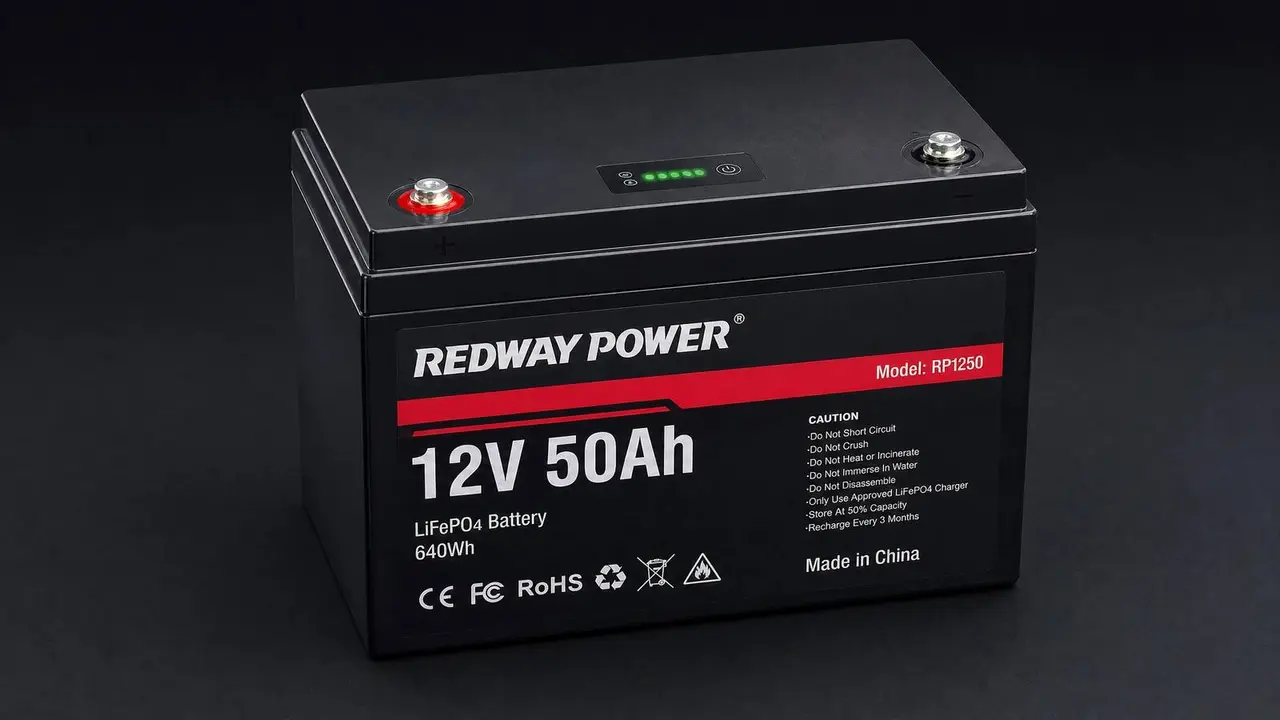
Choosing the best 12V lithium-ion battery for your application requires understanding the key specifications that differentiate quality packs from commodity products.
What Makes a 12V Lithium Battery "The Best"
The best 12V lithium battery for your application is the one that best matches your specific requirements. That said, there are universal quality indicators that separate well-engineered packs from commodity products:
Cell Quality: The cells inside the pack are the most important component. Quality cells from established manufacturers (CATL, EVE, Samsung SDI, Murata) deliver consistent capacity, predictable cycle life, and reliable safety performance. Commodity packs often use unbranded cells with inconsistent specifications.
BMS Quality: The Battery Management System protects the cells from over-voltage, under-voltage, over-current, and over-temperature conditions. A quality BMS also provides accurate State of Charge estimation and cell balancing. A poor BMS will fail to protect the cells, leading to premature degradation or safety incidents.
Build Quality: Proper cell-to-cell connections (welded nickel strips, not soldered), robust enclosure construction, and quality terminal hardware all contribute to long-term reliability.
Thermal Management: Quality packs include thermal management features — at minimum, temperature monitoring with thermal cutoff protection. High-performance packs may include active cooling.
12V LFP vs. 12V NMC: Which is Right for You?
12V LFP (Lithium Iron Phosphate):
- Nominal voltage: 12.8V (4 cells × 3.2V)
- Best for: Marine, RV, solar storage, backup power, telecom
- Advantages: Superior safety, 2,000–5,000 cycle life, no cobalt
- Consideration: Slightly lower energy density than NMC
12V NMC (Nickel Manganese Cobalt):
- Nominal voltage: 11.1V–14.8V depending on cell count
- Best for: Power tools, portable devices, applications requiring maximum energy density
- Advantages: Higher energy density, lighter weight for equivalent capacity
- Consideration: Shorter cycle life than LFP, requires more careful thermal management
For most 12V applications — marine, RV, solar, backup power — LFP is the better choice. The safety, cycle life, and flat discharge curve advantages outweigh the modest energy density difference.
Capacity: How Much Do You Need?
Common 12V LFP capacities and their typical applications:
| Capacity | Usable Energy | Typical Applications | |---|---|---| | 20Ah | 256Wh | Small backup power, lighting | | 50Ah | 640Wh | Marine day boat, small RV | | 100Ah | 1,280Wh | Marine house bank, medium RV | | 200Ah | 2,560Wh | Large RV, solar storage | | 300Ah+ | 3,840Wh+ | Off-grid systems, large marine |
Key Specifications Checklist
When evaluating any 12V lithium battery, verify these specifications:
- [ ] Cell chemistry (LFP or NMC — avoid unspecified "lithium")
- [ ] Cell manufacturer (CATL, EVE, Samsung SDI, Murata, or equivalent)
- [ ] BMS continuous discharge current rating
- [ ] BMS peak discharge current rating
- [ ] Operating temperature range
- [ ] Charge temperature range (critical — charging below 0°C can damage LFP cells)
- [ ] Certifications (UN38.3, UL, CE)
- [ ] Warranty terms
Lithium Battery Company 12V Packs
Lithium Battery Company supports 12V LFP battery programs from 20Ah to 400Ah. Every pack is built to order with fresh cells from qualified manufacturers and includes a matched BMS with the protection features your application requires.
We offer standard configurations for common applications and custom configurations for OEM programs with specific requirements. Contact our team to discuss your 12V battery requirements.