

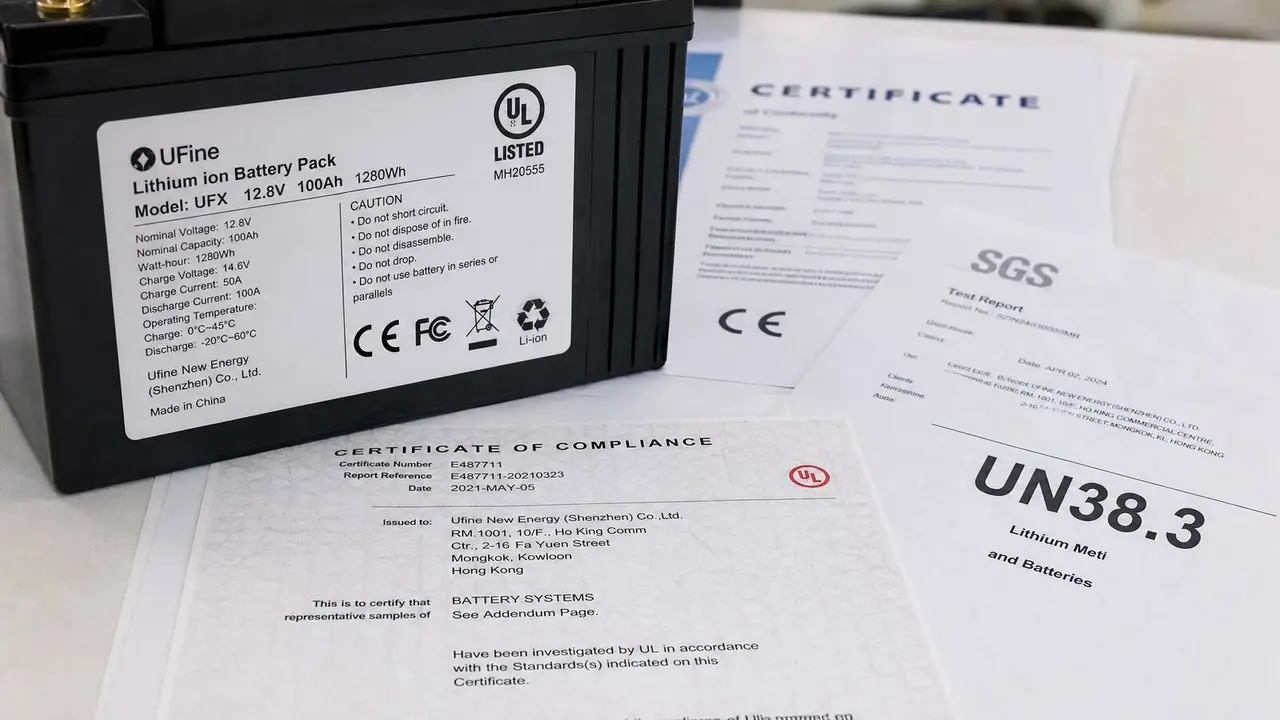
The certifications required for a lithium battery pack depend entirely on the end application and market. Consumer products need UL 2054 or IEC 62133. Defense programs need MIL-STD-810 and NDAA compliance. Aviation needs DO-160. Medical devices need IEC 62133 and often UL 2054. Shipping any lithium battery requires UN 38.3.
This guide explains every major lithium battery pack certification — what it tests, who requires it, and how to plan certification into your product development timeline.
UN 38.3 — Required for All Lithium Battery Shipping
UN 38.3 is required for shipping any lithium battery by air, sea, or ground. It is not optional — IATA (air) and IMDG (sea) regulations require UN 38.3 test reports for all lithium battery shipments. Carriers will refuse shipments without documentation.
UN 38.3 tests include altitude simulation, thermal cycling, vibration, shock, external short circuit, impact/crush, overcharge, and forced discharge. The tests are designed to verify that the battery will not catch fire, explode, or leak during transport.
UN 38.3 testing is performed by accredited third-party laboratories. Test reports are valid for the specific cell and pack design tested — any change to the cell, pack design, or BMS requires retesting.
UL 2054 — US Consumer and Commercial Products
UL 2054 is the US safety standard for household and commercial batteries. It is required for most consumer electronics, power tools, and commercial equipment sold in the US market. UL 2054 tests include overcharge, overdischarge, short circuit, crush, impact, vibration, and temperature cycling.
UL listing (the "UL Mark") requires ongoing factory inspections in addition to initial product testing. This is different from UL recognition, which covers components used in listed products.
IEC 62133 — International Standard for Portable Batteries
IEC 62133 is the international standard for safety requirements for portable sealed secondary lithium cells and batteries. It is required for CE marking in Europe and is widely required for medical device batteries (along with IEC 60601 system-level requirements).
IEC 62133-2 covers lithium systems specifically. Tests include continuous low-rate charge, vibration, external short circuit, free fall, thermal abuse, crushing, and overcharge.
MIL-STD-810 — Defense Environmental Testing
MIL-STD-810 is the US DoD environmental engineering standard. It is required for battery packs used in military and defense applications. See our dedicated guide on Military & Defense Battery Pack Requirements for full details.
DO-160 — Aviation and Aerospace
DO-160 (RTCA DO-160) is the environmental conditions and test procedures standard for airborne equipment. It is required for battery packs used in certified aircraft, avionics, and airborne systems. DO-160 tests include temperature and altitude, temperature variation, humidity, vibration, shock, and electromagnetic compatibility.
IEC 62619 — Industrial and Stationary Applications
IEC 62619 covers safety requirements for secondary lithium cells and batteries for use in industrial applications, including stationary energy storage systems. It is increasingly required for commercial ESS installations and industrial equipment.
Certification Planning for OEM Programs
Certification testing takes time and money. Planning certification into the product development timeline from the start avoids costly delays.
| Certification | Typical Timeline | Typical Cost Range | |---|---|---| | UN 38.3 | 4–8 weeks | $3,000–$8,000 | | UL 2054 | 8–16 weeks | $15,000–$40,000 | | IEC 62133 | 8–16 weeks | $10,000–$30,000 | | MIL-STD-810 | 12–24 weeks | $20,000–$80,000 | | DO-160 | 16–32 weeks | $30,000–$100,000 |
These are estimates — actual costs depend on the scope of testing, the laboratory, and whether any retesting is required.
Frequently Asked Questions
Q: What certifications does a lithium battery pack need? The required certifications depend on the application and market. All lithium batteries require UN 38.3 for shipping. US consumer and commercial products typically require UL 2054. European products require CE marking (IEC 62133 for batteries). Defense programs require MIL-STD-810. Aviation requires DO-160. Medical devices require IEC 62133.
Q: What is UN 38.3 and is it required? UN 38.3 is the United Nations transport test standard for lithium batteries. It is required for shipping any lithium battery by air, sea, or ground. Carriers will refuse shipments without UN 38.3 test documentation. Every lithium battery pack must have a valid UN 38.3 test report before it can be shipped.
Q: What certifications does Lithium Battery Company support? Lithium Battery Company supports UL 2054, IEC 62133, UN 38.3, CE Marking, RoHS, REACH, MIL-STD-810, MIL-PRF-32565, DO-160, NDAA Section 889, Buy American Act, and DOT 49 CFR / IATA DGR for shipping compliance.
Q: How long does battery pack certification take? Certification timelines vary by standard. UN 38.3 typically takes 4–8 weeks. UL 2054 and IEC 62133 take 8–16 weeks. MIL-STD-810 takes 12–24 weeks. DO-160 takes 16–32 weeks. Plan certification into your product development timeline from the start to avoid launch delays.