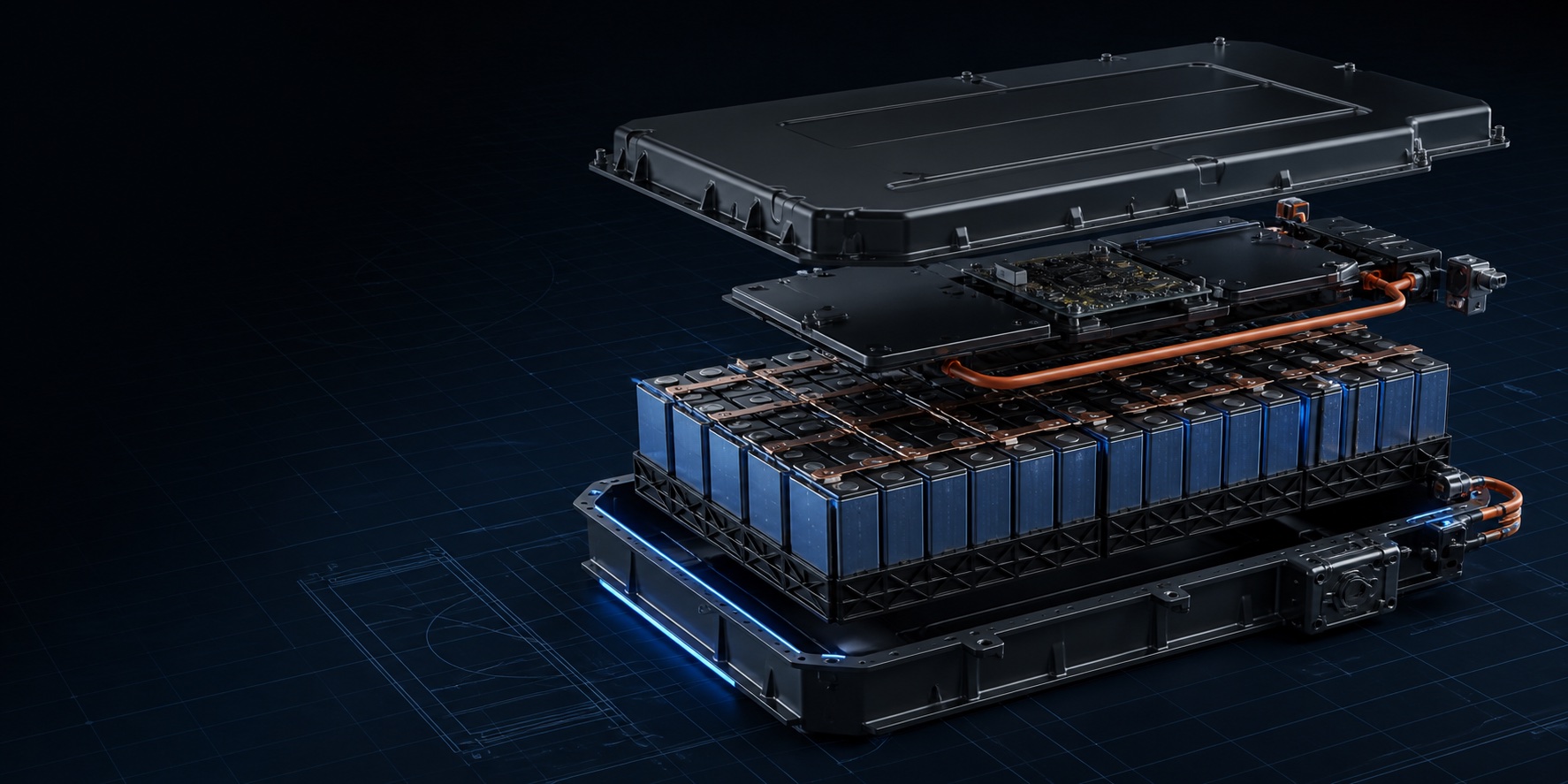
Explore LBC's invite-only custom battery design tool for chemistry-aware nominal voltage, mechanical fit, pack architecture, BMS guidance, and engineering…
The LBC Custom Battery Tool is a proprietary, invite-only web application that turns real project requirements into a preliminary battery pack direction. It evaluates chemistry-specific nominal voltage, series and parallel configuration, cell format, capacity, energy, physical fit, BMS needs, thermal strategy, enclosure, compliance considerations, and early pricing.
The tool provides engineering direction for qualified programs. It does not replace final cell, BMS, thermal, mechanical, safety, validation, certification, sourcing, or production review.
- Access
- Application and LBC approval required
- Login
- Six-digit, one-time email code
- Voltage method
- System class resolved to chemistry-specific nominal voltage
- Calculation engine
- Protected server-side logic
- Output
- Preliminary pack, BMS, thermal, compliance, and price direction
- Final release
- LBC engineering review required
What does the LBC Custom Battery Tool do?
The invite-only tool converts electrical targets, chemistry, available dimensions, application, enclosure, and expected volume into a preliminary battery pack direction. It estimates series and parallel configuration, nominal and charge voltage, energy, physical fit, BMS needs, thermal strategy, compliance considerations, and an early pricing range.
Why does nominal voltage matter when designing a lithium battery pack?
A marketed system class is not always the battery's actual nominal voltage. For example, a 12V-class LFP pack normally uses four 3.2V cells in series, producing 12.8V nominal. The tool resolves chemistry-specific series count before calculating capacity, energy, BMS requirements, fit, and pricing.
Who can use the Custom Battery Tool?
Access is limited to customers, engineering teams, OEMs, and approved partners accepted by Lithium Battery Company. First-time users submit an application, and approved users receive a six-digit, one-time login code by email.
Is the result a final production-ready battery design?
No. The result is preliminary engineering direction. Final cell selection, BMS, conductors, fusing, thermal design, enclosure, charger compatibility, safety controls, validation, certification, sourcing, pricing, and production release require LBC engineering review.
Which battery chemistries can the tool evaluate?
The current engineering engine can evaluate LFP, NMC, NMC 811, NCA, LTO, LMO, LNMO, lithium polymer, blended NMC-LMO, and sodium-ion planning profiles. Availability and suitability are confirmed for the specific application during review.
Does the tool recommend a battery management system?
It provides preliminary LBC-branded BMS family guidance based on series count, current, balancing, communications, protection, and application requirements. The final BMS hardware, firmware, limits, and interfaces must be confirmed by LBC engineering.
What information should I prepare before using the tool?
Prepare the application, system-voltage class or exact nominal voltage, target capacity, maximum length, width and height, chemistry preference, enclosure type, expected annual volume, continuous and peak load, charger, environment, communications, and compliance needs when known.
How is the proprietary battery design logic protected?
The calculation engine runs on the server, access is approval-based and revocable, login codes are personal and time-limited, and customer-facing results do not expose supplier codes or the underlying proprietary algorithm.