
LBC / Engineering guides
Charging LiFePO4 below freezing: how self-heating battery packs work
Quick answer. Standard LiFePO4 batteries should not be charged below freezing (0 °C / 32 °F) at normal current, because lithium can plate onto the anode and permanently damage the cells. Cold-climate packs fix this with a BMS that blocks or limits cold charging and, in self-heating designs, heaters that warm the cells first.
Why cold charging is the problem, not cold use
LiFePO4 cells can usually deliver power below freezing, with reduced capacity and higher internal resistance. Charging is different. When the cell is cold, lithium ions move into the anode more slowly. Push normal charge current into a cold cell and some of the lithium deposits as metal on the anode surface instead. That plating reduces capacity for good and, in the worst case, can damage the separator. It doesn't show up as an immediate failure, which is why it gets missed in testing.
Three ways to handle it
- Block charging when cold. The BMS reads cell temperature and refuses charge below a set threshold. Simple and safe, but the equipment can't charge until the pack warms up on its own.
- Reduce charge current when cold. The BMS (or charger, over communications) allows a reduced current in a cool band and full current only when warm. This needs the charger and BMS to agree.
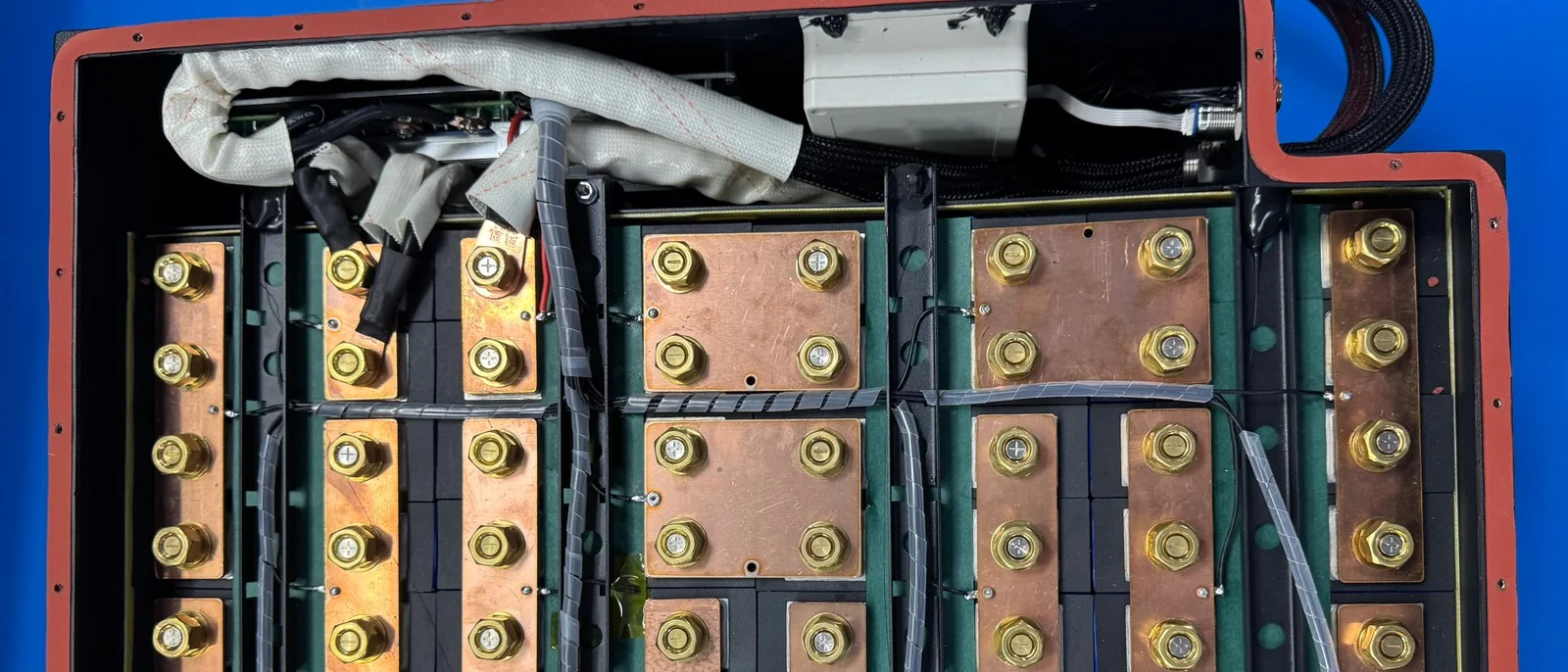
- Heat, then charge (self-heating pack). Heating elements inside the pack warm the cells, powered from the charger, before charging starts. The BMS controls the sequence: heat, verify cell temperature, then charge. This is the option for freezers, cold docks and outdoor equipment that must charge where it works.
What a self-heating pack has to get right
- Heater power from the right source. Usually the charger supplies the heater so the pack doesn't drain itself to warm up. Your charger must support this or be supplied with the pack.
- Temperature sensing in the right places. Sensors on the coldest cells, not only near the BMS board.
- Insulation and enclosure. Insulation reduces heater energy and keeps cells warm between charges, but it also traps heat in use. The enclosure design balances both.
- BMS logic and fault handling. Heater control, over-temperature cutoff and what happens if a sensor fails are part of the BMS design, not an add-on.
- Charger communication. If the vehicle or charger needs to know why the pack isn't charging yet, the BMS has to report it (for example over CANbus).
Where this matters
- Cold-storage and freezer forklifts and pallet trucks. Trucks that charge on a cold dock. See forklift lithium battery packs.
- Outdoor equipment in Canada and the northern US. Equipment that sits outside overnight and charges at dawn. LBC's Canada OEM supply page covers the self-heating option for those programs, subject to configuration review.
- AGVs and AMRs in cold warehouses, and remote power and telecom sites without heated enclosures.
Catalog starting points
LBC's catalog includes cold-temperature 24V-class designs such as LBC24120F (25.9V, 120Ah, NMC with a heat jacket) and LBC25.6120-2 (25.6V, 120Ah). The heating method, charge limits and charger are confirmed for each program in design review.
What to send for a cold-climate battery quote
Lowest charging temperature and lowest operating temperature, where the equipment charges (indoors, cold dock, outdoors), time available to charge, voltage window, current, runtime, existing charger, communications, envelope, and quantities. Catalog programs start at 10 units and custom designs at 25.
Request an OEM battery quote
Frequently asked questions
Can you charge a LiFePO4 battery below freezing?
Not at normal current. Charging a standard LiFePO4 cell below 0 °C (32 °F) can plate lithium on the anode and permanently reduce capacity. Use a BMS that blocks or limits cold charging, or a self-heating pack.
How does a self-heating lithium battery work?
Heaters inside the pack, usually powered by the charger, warm the cells before charging. The BMS checks cell temperature and allows charging only when the cells are warm enough.
Can LiFePO4 batteries be used in freezers?
Yes, with the right design. Discharging in the cold is usually possible with reduced capacity; charging needs heating or reduced current. Plan heating, insulation and BMS charge limits together.