

> Current operating model: Lithium Battery Company is a US-based battery engineering and sourcing partner. Current customer programs use qualified production partners selected for the battery, volume, quality, and compliance requirements. LBC's planned Tampa manufacturing operation is not yet commissioned. Compliance and country-of-origin claims are confirmed only for a specific bill of materials, production path, and contract.
The lithium-ion battery revolution is reshaping how we store and use energy across every sector — from consumer electronics to defense and grid-scale storage. At Lithium Battery Company, we sit at the center of this transformation, manufacturing custom lithium-ion battery packs for OEMs, government contractors, and industrial operators who need performance they can count on.
The Scale of the Shift
Global demand for lithium-ion batteries has grown exponentially over the past decade. What began as a technology for smartphones and laptops has expanded into electric vehicles, renewable energy storage, military systems, medical devices, and autonomous robotics. The International Energy Agency projects that battery demand will increase tenfold by 2030.
This is not a niche market. It is the foundation of the next industrial era.
Why Lithium-Ion Dominates
Lithium-ion batteries have displaced legacy chemistries — lead-acid, nickel-cadmium, nickel-metal hydride — across virtually every high-performance application. The reasons are straightforward:
Energy Density: Lithium-ion packs store significantly more energy per kilogram than competing chemistries. For applications where weight and size matter — UAVs, soldier power systems, portable medical equipment — this is decisive.
Cycle Life: A well-designed lithium-ion pack with a proper Battery Management System (BMS) can deliver 2,000 to 4,000+ charge cycles before reaching 80% capacity. Lead-acid batteries typically offer 300–500 cycles.
Charge Efficiency: Lithium-ion batteries accept charge at high rates and with minimal energy loss. Fast charging is practical. Opportunity charging — topping off during short breaks — is a viable operational strategy.
Low Self-Discharge: Lithium-ion batteries retain their charge during storage far better than older chemistries, making them practical for standby and emergency power applications.
The Chemistry Choices That Matter
Not all lithium-ion batteries are equal. Chemistry selection is one of the most consequential engineering decisions in any battery pack program.
Lithium Iron Phosphate (LFP): The safety and longevity champion. LFP chemistry is thermally stable, highly resistant to thermal runaway, and delivers exceptional cycle life — often 3,000 to 5,000 cycles. It is the preferred choice for stationary storage, telecom backup, marine applications, and any program where safety certification is critical.
Lithium Nickel Manganese Cobalt Oxide (NMC): The performance chemistry. NMC offers higher energy density than LFP, making it the preferred choice for applications where weight and size are primary constraints — UAVs, robotics, and high-performance portable devices.
Lithium Cobalt Oxide (LCO): High energy density but shorter cycle life. Primarily used in consumer electronics where size is paramount and replacement cycles are acceptable.
Lithium Titanate (LTO): Exceptional fast-charging capability and extremely long cycle life. The tradeoff is lower energy density. Used in applications requiring rapid charge-discharge cycles.
What This Means for OEM Programs
For OEM engineers and procurement teams, the battery revolution creates both opportunity and complexity. The opportunity: access to battery technology that can fundamentally change what your product can do. The complexity: selecting the right chemistry, cell format, BMS architecture, and manufacturing partner.
At Lithium Battery Company, we have spent over a decade navigating this complexity for our customers. Our engineering team works directly with OEM programs to select the right chemistry, design the pack architecture, specify the BMS, and deliver a production-ready solution.
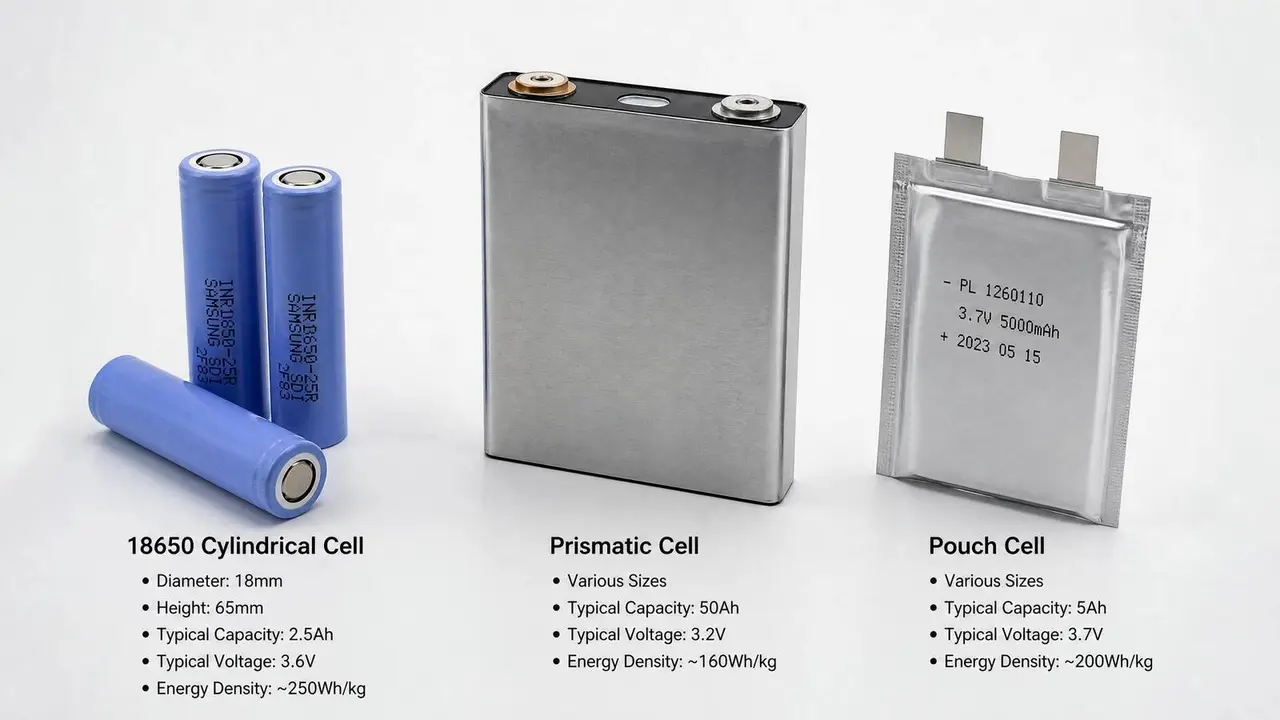
We support LFP and NMC battery programs across cylindrical, prismatic, and pouch cell formats. Our voltage range covers 12V through 144V. Capacity configurations range from single-cell packs to multi-hundred amp-hour systems.
The US Manufacturing Advantage
The lithium-ion battery supply chain has been dominated by Asian manufacturers for the past two decades. That is changing. Reshoring battery manufacturing is now a national priority, driven by supply chain vulnerabilities exposed during the pandemic and the strategic importance of domestic battery production for defense and critical infrastructure.
Lithium Battery Company is part of this reshoring movement. LBC has a separately disclosed plan for a Tampa manufacturing operation, but that operation is not yet commissioned. Current customer programs use qualified production partners
Domestic manufacturing means shorter lead times, direct engineering collaboration, US-based quality control, and supply chain security for programs that cannot afford foreign dependencies.
The Path Forward
The lithium-ion battery revolution is accelerating. The companies that will lead the next decade are those that invest now in domestic manufacturing capability, deep engineering expertise, and long-term OEM partnerships.
Lithium Battery Company is building that future. Contact our team to discuss your battery program requirements.